Wednesday, 31 July 2013

Colourful Coast

As winner of a live brief competition, I was commissioned to design two textile panels for Carnoustie Golf Course. They are currently situated within the new club house building.


Inspiration

I chose to explore the theme ‘Geology’ – looking at rock structures, coasts, stones and beaches.  More specifically I focused my collection of source drawings on Auchmithie beach, exploring mainly the rocks and colours of the cliffs surrounding the beach.   Most of my inspiration came from looking at the rocks on the cliffs but as a contrast I was also inspired by some old boats lying on the beach.   The surfaces and contrast in colours were interesting. Combining the colours and structures from the rocks and boats was what I used to develop my design ideas.  I loved the contrast in colours and developed my work with colour being my central focus. 

Below are two photographs showing my  textile panels in position. There is one panel in the Ladies changing room and one in the Men's changing room.


Detailed shots of both panels
There are various woven patterns used in this fabric
This image shows different colour blends within the fabric
Capturing texture 


Sunday, 6 March 2011

Creating Sustainable Designs


JUNKY STYLING


I came across a website called Junky Styling. They create individu
al, unique, timeless one-off pieces recycled from second hand clothing. The business is all about creating sustainable designs and promoting ethical consumerism.
Everything they produce is recycled, deconstructed, recut and transformed in
to a new garment. All the items are different, no two are the same. They are trying to inspire their customers to look at and think again about disgarding clothes and get them transformed into a one -off piece. The customers themselves can be involved in the re- designing process of their piece.
The eco fashion business promote ethical consumerism, they have happy employees in a good working environment and there is no
pollution involved in the production process. Everything used and displayed in the shop is either recycled, Fair Trade, made from organic materials or ethically produced.
They are also considering training up local communities to create and recycle like themselves.
I have shown some examples of their one off recycled pieces. I think it is a way forward for the future regarding sustainable, ecological, ethical and organic fa
shion.

Saturday, 5 March 2011

Eco Furniture and Interior Designs

Lucy Renshaw is a designer who creates one -off furniture interior pieces, at the same time tackling environmental issues by using recycled materials to create vibrant, exciting new products. Her work is inspired by her travels. She uses recycled materials, embellishing them with embroidery and stitching and other craft techniques which are all ethically produced and eco- friendly.
I thought Lucy's work was interesting and relevant as our business idea doesn't just consider second hand clothing but also incorporates creating interior products and assessories from recycled materials.
Below is a collection of some of her colourful, sustainable one -off pieces


Saturday, 26 February 2011

"Rags 2 Riches" - Group Meeting

We addressed the main issues from the chapters on Designtrust website, which we need to consider when pulling our business idea together. I read a chapter on 'Buyers and Galleries'. It stresses how important it is to never stop selling yourself, products and services when trying to start up a business. A buyer's priorities and responsibilities are crucial within a business.
Customers' needs mustbe satisfied and sales and profits mustbe achieved. It's all about identifying consumer patterns and future trends. The display of stock is just as important when trying to sell to potential customers. I also found the chapter ' Negotiating Skills' useful. It talks about techniques and ideas to help with preparing a presentation or idea. It is better to be over prepared and have samples and photographs of your product to help keep in control,so showing enthusiasm and passion for your service/product. If it is a group presentation it suggests identifying the roles of each colleague to keep it as proffessional and organised as possible. It also states that the clients you are presenting your idea to will probably have objections towards some ideas,so it would be useful to have some possible answers for them.
For the next meeting I will have photographs of some scraps and fabrics for our business blog, some research on different blog styles, eg. Bertie Brown have an attractive laid out blog page which helps to sell the business. For our presentation, we intend to show examples, so the idea is visually represented as well. I own a bag made up of reused materials which would be good to show.

Next time we meet we are hoping to design our business logo. Suggestions were to incorporate pieces of fabric into the logo or to keep it quite natural and eco looking. The logo below is an example from an upcycling website. It explains the logo was put together by collecting items that represent different areas of upcycling from furniture to fashion and art.


We also intend to produce a business card, an idea suggested on Designtrust websiteas a way of promoting.
We have already created a 100 word rationale summarising our business idea.


Take a look at this website.
http://smoketreejunctionantiques.com/
Smoketree junction is an eco- friendly, eco-chic experience. VINTAGE UPCYCLING IN A MODERN WORLD
A quote from them -
"Things we find are not only re-used, re-purposed, re-imagined, re-designed, but "UPCYCLED" into funky, clever, and practical new art."

I searched for different exisiting upcycling logos to see the variety in styles.


Saturday, 19 February 2011

Continued Group Discussion...

At the latest group meeting we discussed the next steps to push our business idea forward. Each person in the team wasgiven a task, which involved reading 4 chapters each from the Designtrust website on how to start up a business. We hope to push our business idea forward and focus it more.
For the next meeting we hope to produce a business rationale, a logo and a summary of what each chapter on the website includes.
The title of the business is going to be 'Rags 2 Riches'. The literal title will let customers know exactly what kind of business it is and we hope it will attract a particular clientele, in this case a post consumer.

Michaela and I put a poster together to illustrate our business idea more clearly.


Sunday, 13 February 2011

Progress on project

At the last meeting we started to brainstorm ideas on what our business concept could be. Everyone agreed to work around the idea of 'upcycling' which would attract a certain clientele. I brought an image from an eco fashion book along to the meeting. A company called 'From Somewhere' design using pre consumer waste such as scraps and production ends to create a collection of one- off pieces for high end fashion. 'From Somewhere' is all about rescuing textile waste as a design solution to an environmental problem.
After researching such companies we decided to base our business around a similar idea.
The group has so far decided that the business would be a shop off the main high street, where the customers would bring along waste material, which would otherwise go to the landfills. This waste material could consist of several different materials including textile waste. With these materials the idea is to combine different materials together to create a 'new' garment, for example, creating an unique pillow out of old clothing of random patterns and colours. This means the customers are being environmentally conscious as well as having a unique street style. For every piece of waste brought in by a customer, they will recieve points on a card, ultimately getting a reduction off of a bought item. Introducing an incentive will hopefully attract several types of customers.We would create an app on the ticket to link customers to our blog telling them everything about the item , so helping us gain trust and a loyal customer base. We also considered introducing workshops for customers to create their own items from recycled waste. In addition,people could bring a piece for alteration.


I did some research into how successful upcycling acutally is in the street. Upcycling gets lots of street credit, as it addresses social challenges that the fashion industry is currently facing. Upcycling is a design solution for the fashion industry. The materials are readily available and it also helps reduce the factories' high supply demands Upcycling reduces textile waste, which is a potential solution to low supply of raw materials and also having to produce something from scratch.


A quote I found online ' Upcycling is a sustainable solution to overconsumption'.


We are still working on a title for the business but ideas so far are:


Crafty Remakes


Thread Fashion


Rip and Stitch


Scraps and Rags


The Peoples Fashion


Remix


Rethread


We are still working on the service and will update soon with the a potenital business idea.


Upcycling Shop


Chair made out of recycled shoes

Sunday, 6 February 2011

Post Consumerism

Our Group Poster :-


At our group meeting we created a profile on what we thought a post consumer was. A post consumer is someone who doesnt put a 'price tag' on something, they look at the sentimental value rather than the cost. Post consumerism is a fairly new way of thinking, indicating a shift in attitude ,where sustaining the environment is a priority. It's all about changing attitudes to save the planet in the future.
A post consumer would buy a more expensive item as the quality and therefore how long it will last are given more consideration.Something 'cheap' could be thrown away after a short time, but a quality item could eventually be recycled eg. 'dolly rocker' which is shown in the poster above, is constructed from recycled materials and is very sellable. Colourful items of clothing from markets, charity shops and jumble sales can be collected and then reconstituted into new garments.

Reconstructed clothing from recycled items

Post consumers also consider whether the product is ethically produced and eco - friendly, so they tend to go for items which are green branded, such as Fair Trade produced goods. Even although Fair Trade goods can be more expensive, post consumers are more concerned about the quality and durability. As clothes from Primark are not ethically produced and the quality isn't that good , post consumers wouldn't shop there. They tend not to follow trends or persuasive advertisments, instead they stop and think before they buy. Post consumers try to encourage more reusing and recycling and less buying.
Being environment conscious,post consumers are also more likely to walk or cycle rather than use transport, as they are concerned about the effect of pollution on the environment.

In the poster we have given a few examples of celebrities who follow this way of thinking- Russell Brand, Jack Johnston and Natalie Portman. Post consumers also like to give to charitable causes eg. Jack Johnston helped underprivileged children in New Zealand to get eco - friendly bikes.


Tuesday, 25 January 2011

Semester 2 Assignment 1b

The first part of the assignment required taking a Vark test to see which type of learner I was.

My results were as follows:

Activist - Low, Reflector - moderate, Theorist - Low , Pragmatist - low.

This showed that I am mainly a reflector when learning, which is the one I predicted for myself before taking the test. I was quite surprised by only being a moderate reflector as I feel I like to take my time over different tasks and collect more than enough information before reaching an outcome, especially in my design practice. I like to hear what other people have to say before I express my own ideas and opinions, especially in group discussions. I tend to observe others and their ways of working. I enjoy and appreciate projects when there are no tight deadlines involved, as I tend to panic when there is pressure to finish something or when given a task without much notice or preparation time. At the end of a project I like to see where I can make improvements.
I am definitely not a pragmatist as I am not usually keen to try out new things straight away.

After taking the Vark test, I had to meet with the rest of the team to discuss my results and predict what type of learner each of them is.

The team result was as follows:

4 Activists
2 Reflectors
1 Theorist

There are a variety of learner types within the group which is an advantage when carrying out team projects and discussions. This probably allows us to work well together, making us quite efficient as a team. As we have a mixture of learning styles each person can contribute as we have different ways of approaching things. There are no pragmatists, but I feel as a group we are able to adapt our ways of learning to suit the joint task to help us achieve something which might have to be approached in a different way. I sometimes have to alter my approach depending on the type of brief. My latest brief was very different, which challenged my research methods and usual ways of thinking, so I had to adapt to suit the task.

Everyone in the group had to predict what type of learner each of us was. Some of the results were quite surprising and we realised we didn't know each other as well as we thought we did.

I think the group will be able to understand each others’ ways of thinking more as we continue to work together on future tasks.


Tuesday, 30 November 2010

Second Summary

Brown, M. B., (1993). Fair Trade; Reform and Realities in the International Trading System. New Jersey: Zed Books Ltd

The Division of World Resources between Rich and Poor

There is currently an unequal world, where the division between the North and South is remarkable, with industrialised land in the North and a much poorer underdeveloped world in the south – ‘The Third World’. The point the author is making is: How much can current trade practices be changed to benefit all in the future? Can world resources be saved and economic and environmental sustainability be maintained? The author explains that most of the world’s resources come from the developed world and only non-renewable resources are being produced in the third world. World population is huge, with the majority of people living in third world countries. Those people occupy only just over half the cultivable land, explaining why they are probably so poor.

The author states that the problems they are facing now could be a result of the population growing too fast for the amount of land that is actually occupied and cultivated and this problem could increasingly worsen. Some developed nations could have the best, although less, cultivable land for crop growing and still have as much agricultural production as the third world as a whole. In reaction to this, rain forests are being cut down so people in tropical areas can use the land for cultivating on, but, due to a lack of understanding about how it should be looked after, it eventually becomes useless.

The author suggests that there is an increasing weight on third world countries and this is down to the divide in labour output between the different worlds. The problem is that third world countries only have crops from the land which is all they can trade into markets. The access to some of this ground is a problem, even if it is productive.

Most of the produce imported to the ‘First World’ is essential foods for protein but the food mainly exported to third world countries is not so they are left with a lack of protein in their diet. The author suggests that this problem could be helped by moving foods moved into more deprived areas. The amount of food being produced is not being shared fairly. Deprived areas have less food because farmers are waiting for the prices to increase and there is not enough transporting of goods between themselves.

The question is: Is there any point in third world countries increasing their place in world trade if the division of inequalities is so large? Should they increase trade between each other instead? The author suggests that third world countries should stop exporting raw materials to the developed world and keep what resources they have left to expand trade between themselves.

To conclude, Third World countries only do well when world trade is high but then it generally ends up falling again. There is no advantage in trade between the different worlds, as it’s not always reliable and dependent on the state of the world economy

I feel researching factors like population growth and land cultivation helps give me a better understanding of the inequalities between the North and South divide.

Assignment 4 - First Summary

Raynolds, L.T, Murray, D., (2007). Fair Trade, The Challenges of Transforming Globalization. USA: Routledge

Contemporary Challenges and future prospects

The chapter discusses the challenges facing Fair Trade in its efforts to transform globalisation and to develop economic and environmental sustainability in the Third World, through different trade practices in the market. It also views its increasing growth as an organisation, focusing on the clear tensions created working in and against the market.

As FairTrade has rapidly developed and grown over recent years, the author states that this has given rise to a number of challenges, which could become a future threat unless changes are made. It is mentioned that there are obvious contradictions within the trade practise of Fair Trade and market priorities. Fair trade seeks for improved changes in trade practises and pushes for a more equal trade between northern consumers and southern producers, whilst still promoting ethical values. It is looked at from different perspectives and the author explains why there is a divide in the movement. Some people see Fair Trade as a development which is trying to promote fairer trade practices and values within the market, based on factors like sustainability. Others see it as more of a commercial venture, in which Fair Trade and the market values and practices are still mainly dominant.

The author questions whether the growth of Fair Trade is a sign of achievement. Or, has Fair Trade’s principles and practices been over looked due to commercial success?

The author highlights some central challenges facing Fair Trade now. There has been a huge shift from supporting small alternative organisations to encompassing a large number of committed consumers, so many more certified products have been made available for sale in markets. Some people see this as a success in reshaping market relations but others see it only as attempts to profit from Fair Trade products. FLO has increased certified sales to maximise the amount of workers and producers benefiting from being part of Fair Trade, but the market is demanding they have more reliable supplies to offer. The author explains that FLO are more interested in where Fair Trade stands within the market rather than the concerns of north/south inequalities. The smaller alternative organisations are concerned about getting less notice than larger distributors who actually certify less Fair Trade products than themselves. If present trade practices continue then the success of equality in trade could be questioned.

The number of Fair Trade workers has increased as Fair Trade merges production units to manage quantity and quality requirements. Some think this shows Fair Trade’s ability to support small scale farmers but others think it just highlights North/South inequalities. The trends in the market now are pushing out the smaller scale producers as bigger distributors have increasing quality production and therefore the author questions whether small producers are benefiting. Certain quality requirements such as shifting to organic production could possibly create difficulties for disadvantaged producers, questioning Fair Trade’s strategies for small scale producers. Diversity of production is also being demanded by the market, again disadvantaging small scale farmers. The demands of northern markets are affecting the activities of Fair Trade workers.

It is the author’s opinion that the central challenge to Fair Trade is the dominance of retailers and branders who are more interested in market values rather than the organisation’s aims and that the practices and strategies adopted by the movement should remain focused on the small scale producers.

Saturday, 23 October 2010

Assignment 3 Group Meeting and Mind Map


During reading week, our group met up again to discuss the different topics we were all interested in researching for our dissertation. As a group we suggested everyone should pick a topic which is of real interst or a world wide issue they are involved in and keep up to date with.
I found researching Fair Trade for my wiki entry interesting and learned a lot more about the subject and how it positively affects producers. I have always been interested in the sustainable development of third world countries and how communities within these countries manage to make a living.
As I study textiles, I am interested in designing for interiors, in particular rugs and carpets. A lot of rugs are imported over to Great Britain from some less developed countries - India, Iran, Afghanistan, Pakistan and Turkey. Does the importing of the rugs really help boost these countries economies and the lifestyles of the actual producers?

I would like to explore some less developed countries- parts of Africa, to discover how the workers manage to sustain their livelihoods. I'd also want to explore what impact the fair trade organisation has. What part do designers play in helping boost their incomes?

As a weaver, I know how time-consuming and expensive it is to produce a woven sample. Does it seem fair that weavers in less developed countries are paid less to carry out similar work?

At our meeting we talked about different research methods to use , for example Primary and Secondary, for further investigation.

Not everyone had finally decided on a topic for study, but some included Art Therapy, Recycling, Globalisation and Education. A few of us decided to continue researching into our wiki subjects.


This is my Mind map showing a few ideas which I will look into for my dissertation.


Thursday, 7 October 2010

Assignment 1- Wiki - Fair Trade and Design

Fair Trade and Design

Fair Trade is all about re-shaping the structure and practices of International Trade, focusing on helping and benefiting the most disadvantaged producers and workers in Third World countries. The idea is to reduce the amount of poverty within these countries and allow the poorest communities to have a more sustainable environment and livelihood.

“Northern activists working with producers, labourers and other impoverished sectors of the Global South are using market-based strategies to mobilise consumer awareness in order to bolster incomes and empower Southern producers and workers.” (Raynolds, 2007)

The organisations involved in Fair Trade work alongside businesses, community groups and individuals to help provide better working conditions, secure the rights of the most marginalised farm workers and producers, obtain better prices for them and so try to strengthen their position in the world market. To tackle these developing issues the foundation provides a certification on a product, displaying the Fair Trade mark, which alerts consumers that the minimum requirements in relation to fairness have been met. It is also a sign that the item is a quality Fair Trade product. The foundation encourages demand for fair -trade products, allowing for more producers to sell. To motivate the workers to produce quality crops, they are given a Fair Trade premium, which can only be used for social and economic benefits and is usually put towards farm improvements to increase the produce and the quality.

History

It was just after World War II that the Fair Trade movement began. Small religious community groups in and around Europe were buying handicrafts from poor producers and workers above the market price. This buying to support the needs of poor communities was the starting point of the Fair Trade movement. Poor producers were selling handicrafts directly to consumers. The whole idea grew considerably during the 1960’s and 70’s and many ‘World Shops’ with handicrafts began to appear. By the 1980’s, it attracted more consumer attention until it eventually expanded out to include some food items, such as tea, coffee and cocoa.

The first Fair Trade label was introduced in 1988 and the first Fair Trade coffee from Mexico was put into supermarkets. In the late 1980’s product certification and labelling was initiated. All the alternative Trade Organisations in the Global North and South wanted to increase sales by moving away from just handicraft shops. They planned to advertise food items in major supermarkets and so have more Fair Trade products available for consumers. By the early 1990’s separate trade organisations combined their efforts to work together.

The Fair Trade Foundation in the UK was established in 1992 and the first Fair Trade products were sold in supermarkets in 1994. The Co-operative was the first company in the UK to go Fair Trade. It was established by CAFOD, Christian Aid, Oxfam, Traidcraft and the World Development Movement.

It was in 1997 that the Fair Trade Labelling Organisation International, (FLO) was created. FLO set standards for producers and traders and continues to develop these standards. There was an incredible shift in the Fair Trade movement during this time.

“Fair Trade has emerged as the most important market-based mechanism to improve the lives of producers in developing countries.” (Nicholls, 2005)

Although many alternative Trade Organisations were fading out of the picture due to a decline in handicrafts, there are still some places, around Europe and in Japan which continue to thrive with their alternative Trade Organisations.

“Fair Trade organisations (backed by consumers) are engaged actively in supporting producers, awareness raising and in campaigning for changes in the rules and practice of conventional international trade.” (Long, 2005)

In 2002, FLO introduced a new International Fair Trade Mark. The purpose of the mark was to increase the public’s awareness, alerting them to the organisation’s significance. After the introduction of this mark there was a notable increase in consumer concern about the environmental and social sustainability in third world countries. There is now an ever-growing demand for Fair Trade products in supermarkets, as consumers are becoming increasingly aware of the developing issues in these countries.

Currently, Fair Trade production in Africa is expanding most quickly. It is the top exporter of certified tea, fruits, juices and wine. Since becoming established, the benefits of Fair Trade to producers and workers have been considerable .There has been an increase in countries becoming Fair Trade and there is an incredibly diverse range of certified products in supermarkets. With the current expansion rate, there are now concerns about the increasing growth of production and the ability of the organisation to continue to secure rights of workers as demand rises.

“The growth of large-scale production raises questions about the ability of fair trade to empower workers...” (Long, 2005)

Fair Trade and Design

The general increase in public awareness of the Fair Trade Foundation is directly linked to the organisation’s marketing strategies. In today’s world, there are plenty opportunities to promote and advertise. The internet enables the organisation to promote its aims, provide updated information about what it is doing and keep the public interested in its achievements. TV and magazine advertising are also important ways of promoting its work. Also, schools can apply to become Fair-Trade schools with further raising awareness.

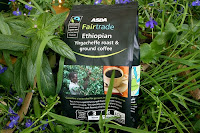
The Fair-trade logo is clearly used to promote food items in supermarkets and attracts consumer attention. The logo itself is instantly recognisable. It is simple, yet eye-catching and is open to individual interpretation. As Fair Trade is a world-wide reputable organisation, consumers don’t doubt the quality of the product and are prepared to pay a little more as they have trust in the organisation and what it stands for. Many products show bold colourful images of the farmers at work, so promoting the value of fair trade. The images and information also try to advertise the natural organic quality of the product, so the consumer automatically assumes the product is produced to a high quality. Often the packaging is appealing to the eye, a further incentive to buy.
The marketing of Fair Trade clothing is perhaps less prominent than the advertising of food items and sales could benefit from a more obvious use of the logo and labelling giving information about production. Stores could do more to distinguish Fair Trade clothing from the non fair- trade items by advertising with signs and posters to attract consumers. Bold and bright advertising to state the aims of Fair Trade and to raise awareness of workers’ economic and social conditions may help to attract consumers to such clothing items in stores. Also, it is important to emphasise the high quality of the goods. Big stores could perhaps do more to promote Fair Trade clothing through in-store advertising, but also through magazines and TV adverts, always clearly displaying the logo and providing information about the production. The use of a celebrity to model clothing could also help to attract consumers.

For a Third World country to become less poor, the production of its goods and services has to be increased.

“If these resources are not available domestically in sufficient quantity, they may be obtained externally, either through official programmes of foreign aid and technical assistance, or through foreign private investment and immigration.” (Cutajar, 1967)

Companies such as ‘People Tree’ are trying to increase the amount of cotton being grown organically by workers. They are hoping to eventually make all their products from organic cotton in the near future. This will increase the demand for more organic cotton being produced and so create more jobs for workers in these under-developed countries. A rise in production within these countries would also mean more income for communities to put towards education, health and other services of need.

Companies like People Tree are trying to promote and advertise a wider market in Fair Trade clothing. More marketing of Fair Trade means more demand on retailers from consumers, directly spreading public awareness of Fair-trade aims. Having a wider range of Fair Trade cotton products on the market will encourage consumers to look and hopefully purchase because the items are organically produced and proceeds benefit poor workers.

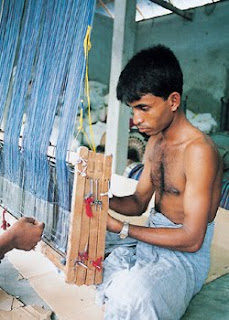
‘People Tree’ support 50 Fair Trade producer groups. They carry out programs through which they train workers, improving their skills as well as allowing them time to produce the products by hand, which is rarely done now and can be more appealing to consumers. They also give technical training to increase workers’ efficiency and productivity. During the design process, the People Tree designers always think about the effects on the producers when making decisions. The designers will always choose methods which are more labour intensive and will make sure their designs are going to be beneficial to the workers.
Companies from the developed world working with Fair Trade will directly impact on designs due to cultural aspects. As more companies become Fair Trade, there will be an increase in public awareness and consumer demand for the goods. Farmers’ lives will improve and they will learn new skills.


References

Cutajar, M.Z. and Franks, A., (1967). The Less Developed Countries in World Trade. London: The Overseas Development Institute.

Nicholls, A. and Opal, C., (2005). Fair Trade: Market – driven ethical consumption. London: SAGE

Raynolds, L.T, Murray, D and Wilkinson, J., (2007). Fair Trade, The Challenges Of Transforming Globalization. USA: Routledge

The Fairtrade Foundation, (2010) [online] Available at: http://www.fairtrade.org.uk/ [Accessed 22nd September 2010].

The Fairtrade Foundation, (2010) [online] Available at: http://www.fairtrade.org.uk/what_is_fairtrade/history.aspx [Accessed 22nd September 2010]

The Fairtrade Foundation, (2010) [online] Available at: http://www.fairtrade.org.uk/what_is_fairtrade/fairtrade_foundation.aspx [Accessed 22nd September 2010]

The Fairtrade Foundation, (2010) [online] Available at: http://www.fairtrade.org.uk/resources/films/cotton_cameroon.aspx [Accessed 23rd September 2010]

People Tree, (2010) [online] Available at: http://www.peopletree.co.uk/ [Accessed 1st October 2010]

Shared Earth, [online] Available at: http://www.sharedearth.co.uk/ [Accessed 1st October 2010]

Fry, C., (2007). Cottoning on to a good thing. The Guardian Online, [online] 13 April, Available at: http://www.guardian.co.uk/environment/2007/apr/13/fairtrade.organics [Accessed 1st October 2010]


Saturday, 25 September 2010

First Assignment Progress

At the second meeting we discussed how each of us was progressing with our individual research topics. We were able to help each other by suggesting websites or people who could be approached for more information. As a group we thought it would be best to keep in touch via Facebook as a common link.

Afterwards, I went onto the Fair Trade website, where I was able to find a lot of information including short video clips of farmers at work from different Fair Trade towns, who were reflecting about how being part of Fair Trade has given them and their communities a better life.
I am interested in looking into the Third World Countries which have become involved in the Fair Trade Foundation Fair Trade has had on the communitity as a whole. Has it reduced the amount of poverty within these countries ?

Below I have put together a mind map of different aspects of Fair Trade.


3rd Year - Assignment 1


For this assignment I'm meeting up with my other team members on a regular basis to discuss our progress on each of our individual research topics. During the first meeting we all selected a topic of interest and had a brief discussion on what we thought each topic covered. We also thought about the relevance each one had to design and suggested any ideas that we could think of at the time. For example I am going to be looking into Fair Trade and how it links to design. Suggestions were to look into the branding and advertising of the Fair Trade mark. Is the mark designed and illustrated to its advantage? Are most people aware of the importance of the Fair Trade mark?
During this meeting we discussed what research methods we could use to develop our understanding. Methods suggested included cross-search, library resources, internet, brainstorming, group disscussions and a mind map which could be ongoing.

Below is a mindmap summarising all the points discussed during the first meeting,including the different topics each of us is looking into.


Thursday, 1 April 2010

Design of Starbucks Coffee Shop.

Starbucks is a world –renowned coffee shop/ cafe business , geared towards middle class clients. It sells itself on the variety of flavours of coffee beans it has available, the smell of it greeting you when you walk in. This shop is in the middle of a busy shopping precinct, an ideal location for its business. The trademark ‘Starbucks’ logo is clearly seen, especially on all the mugs, a good advertising idea, when you think about the take-away cups as well. The entrance is welcoming, long open windows, showing the interior, which is tastefully decorated and classier than Kentucky Fried or McDonalds. However, some people might like to be less noticeable in the inside, so they would have to look for seats away from the entrance, which is not that easy as it was really busy when we were there. Tables are generally small, for twos mostly and as Starbucks is encouraging people to come in and try out the coffee it is probably trying to attract business people-there is wi-fi available or occasional shoppers, wanting a coffee break in comfortable surroundings. It doesn’t really cater for families, tables are too small and the menu and price would not suit most families. They would be more likely to go to Kentucky Fried or McDonalds. The staff are easily recognisable and behave in a way expected by the company. They are polite and promote the good reputation of the company, saying our staff are friendly, welcoming and attentive. The tables are close together, which gets more people in, which is good for business but not so good for privacy, if you needed it. People on their own looked more conspicuous. Maybe the soft -seat area could be arranged to be more appealing to individuals and be sectioned off more, with magazines / newspapers available for people to browse through. There could be a screen showing aspects of Starbucks business fading in /out so people on their own have something to focus on and perhaps company close by, making it easier to start a conversation. There could be pleasant music playing in the background.
Overall, Starbucks has carefully considered the market it is catering for and going by how busy the shop was when we were in, it is very successful.

Monday, 29 March 2010

Assignment 5b

Proposal 5B

Research Methods To Develop ‘Bridges’ Brief

For one of my self- motivated projects, I chose to explore ‘Bridges’, concentrating on their structural build, their aesthetic appearance and their use as connections to get over waterways .My proposal for an alternative approach is to put more focus on primary and secondary research skills to tackle my original brief more diversely, developing my initial ideas and understanding further.

At the start of any design brief, I always begin by creating a mind map to collect together my initial ideas for research. Usually one idea sparks another idea, leaving me scope to go off on different routes as the project progresses. I would still use the mind map for this brief, adding new ideas as I looked at other research methods. A mind map helps to create a clear picture about how you are going to progress and which areas you are most interested researching into. At this point, I could further develop the topic by having a brainstorming session with friends, feeding off their ideas and adding these into my mind map. This would bring in other routes for researching which I might not have thought about. One idea could lead to several ideas to create a more developed and diverse study, for example, why bridges are built the way they are due to the land formation or their location, the environmental surroundings of a bridge including depiction of colours and what you can see through the architectural patterns of a bridge’s build. By using a variety of research methods, I could develop ideas from a mind map that were not so easy to tackle, instead of automatically going for options I feel more comfortable approaching. By looking into less obvious ideas, I feel I would get more interesting research from it.

Using the cross search tool would allow me to find appropriate resources in articles, journals or books. I could access diverse information on the topic, bouncing off ideas and also providing questions/answers from other people’s research and approaches to highlight an area I might not have considered before. Through such resources I could access historical information about bridges, information about design & construction and reasons for particular styles, because of the natural surroundings or usage. I would feel motivated by looking into other people’s research, another link to consider when creating my own brief. Reading extra literature would help broaden my understanding and encourage me to question and think more deeply about my own ideas on the topic. I might question why certain aesthetic materials were used and search for sources in connection to this. From using this tool previously, it does make you analyse more critically your own initial ideas and also introduces new ones for further consideration. This research method also provides answers to and results for specific aspects of the topic , for example the decisions taken on the type of architecture, the materials used to cope with vehicle weight and pressure, bringing in aspects of engineering, and the aesthetic appeal of the design. Although time-consuming, I feel using this tool would open up other areas to research and would be an effective research method to apply for this project especially as I have only a limited background knowledge of bridges.

I already use observation when carrying out any topic and in this topic I have already explored bridges and the surrounding environment to obtain good observational drawings and ideas to develop from. Taking more obscure photographs of the architectural build of different bridges, showing structural patterns, colour and surrounding landscapes, in connection with bridges of different times and styles would add an alternative approach. Looking at the different materials used to build rural bridges, compared to bigger urban ones would be interesting. The choice of materials would be related to the usage and weight on the bridge and through observation I could look at how this choice would affect the aesthetic look of bridges. I think videoing for a limited time to monitor usage of bridges as connections and to study people’s reliability upon them would also be interesting. Probably most people take for granted the importance of bridges in letting them reach their destinations more quickly and easily. The video would let me study their reactions and behaviour. It would be more valid to take video footage at peak travelling times to obtain most information. Previously when I undertook an observation, taking photographs helped to capture specific concepts I was looking into, which was useful to back up what I had said. Therefore, taking a series of photographs at the scene would allow me to capture valid observations, giving a sense of the place and atmosphere of where different bridges are, so the photographs would be telling their own story.

Conducting interviews would allow me to find out whether people really do take bridges for granted or whether they do realise their importance as connections to destinations. I would get varied opinions through Interviewing commuters and occasional travellers. It would be interesting to find out what they consider to be important aspects - the structure and design, the aesthetic look, including the surrounding landscape, ease of use- traffic jams /tolls, and the convenience of the service. I would be able to gather information about the importance of bridges in different locations. Would opinions vary for different bridges, for example busy urban ones compared to remote, quaint rural ones? From carrying out interviews previously, I have found people are willing to share their thoughts and by interviewing commuters as well as general members of the public I would be able to gather a range of opinions which would be useful to develop ideas from.

To conclude, by applying a variety of research methods, I would broaden my general knowledge of the topic and would be able to create a more diverse approach when developing my brief. I would get a lot of information from literature and images, but interacting with users through observation and interviews would add another dimension, which would be more meaningful for design issues, as their views would be important.